

FlightStack
IN ACTION
Focusing on the most critical phases of flight

Austere

Taxi

TakeOff

Landing
Terminal area autonomy remains unaddressed... until now
Taxi, takeoff, and landing are widely recognized as the most risk-prone phases of flight, where precision, coordination, and situational awareness are paramount. Relying solely on human perception leaves room for critical errors when it matters most.
Even minor misjudgments can have significant consequences, making training, technology, and clear communication essential.

Source: USAF

A C-17 Globemaster crashes after crew fails to deploy landing gear.
Source: USAF
Autonomy during cruise has advanced rapidly, however, the terminal environment, where aircraft are closest to the ground and operations are most complex, has remained a persistent gap.
Dense traffic, dynamic conditions, and high-stakes decision-making have made this phase especially difficult to automate safely and reliably. Until now, solutions have fallen short of addressing the full scope of challenges in this critical airspace. VTI Aerospace provides a new approach to finally bring scalable, intelligent autonomy to the terminal area.

Austere Operations
No Infrastructure Required
FlightStack identifies and tracks the landing surface using vision alone. It does not need GPS, ILS, or pre-surveyed waypoints.
Austere Surface Assessment
The system evaluates the landing zone in real time (surface condition, obstacles, dimensions, and approach path).
GPS-Denied Approach Navigation
Visual determination of aircraft position, angle, and distance to the runway throughout the approach, maintaining accuracy in environments where GPS is unavailable.
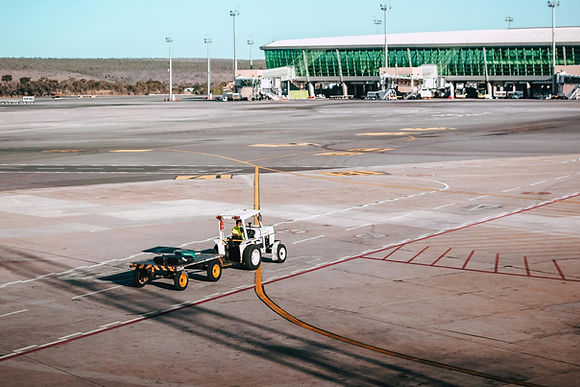
Taxi
Airport Surface Support
Constructs a surface route from current location to runway, indicating hold-shorts. Provides active tracking and guidance during taxi operation.
Clearance Interpretation
Parses taxi clearances, runway crossing clearances, and takeoff clearance.
Runway Crossing Awareness
Monitors hold-short lines, displays boundary crossing status, supports crossing requests.

TakeOff
Centerline Tracking
Visually determine aircraft position relative to the runway centerline, providing live outputs.
Clearance Confirmation
Proposes, parses, and acknowledges takeoff clearance.
Continuous Runway Monitoring
On takeoff roll, the system provides active monitoring of height above runway and centerline tracking, and alerts pilot of surface incursions and lateral deviation.
Handoff
Recommends frequency change, supports pilot check ins, and confirms departure routing.

Landing
Runway Detection & Tracking
FlightStack visually identifies and continuously tracks the runway from initial detection through touchdown without needing GPS input.
Centerline & Deviation Monitoring
Real-time lateral and vertical deviation outputs throughout the approach and landing roll, providing continuous positional awareness.
Occupancy & Hazard Detection
The system monitors the runway for traffic and incursions throughout the approach. If the runway is occupied, FlightStack alerts the crew, supporting the go-around decision.